Hydrotherapy – Why Does My Child Need It?

Girl recommends reading articles from Tiptipul Clinic

Infants and children are often characterized and diagnosed with physical neurological developmental delays, typically congenital, and additionally, in today’s advanced world, with emotional imbalances.

The Effect of the Aquatic Environment on the Child:

Numerous studies demonstrate the improvement experienced by infants and children with various issues mentioned above in an aquatic environment. Water has unique properties that enable effective and beneficial treatment: buoyancy allows working with the child on musculoskeletal issues without the interference of gravity found outside the water—buoyancy is the opposite force. Water temperature (34 degrees Celsius) allows working on high muscle tone (hypertonia). The warmth helps relax the muscles and enables easy opening of the joints without effort or pain for the child. Conversely, water resistance is much higher than air resistance, which allows working on muscle weakness—hypotonia (strengthening the shoulder girdle is very common). Using the center of gravity (center of mass)—the center of gravity changes according to water depth and allows working on stability and balance. Working with children in water is done in a playful and gradual manner while assessing abilities. It varies from child to child and is adapted in an organized treatment plan by achieving set goals.

Ten Points in Working in Water:

There are 10 points that the therapist works according to and progresses with the child to achieve complete independence in water—a therapeutic approach called Halliwick.

The first points relate to the therapist’s holds on the child, submerging the head in water, and blowing bubbles, which enables “breathing” underwater.

The following points relate to orientation in water—understanding that certain movements will lead to specific rotations of the body. For example: when you lie on your back in water and lift a limb (hand, leg),

you see how the body rotates without your full control over the body. These points are also used to work on strengthening one side of the body.

Additional points relate to controlling stability and balance against disruptive forces such as turbulence, waves, etc.

All ten points build independence in water and coping with situations that help and balance deficiencies in the child’s daily life.

Games in water are adapted to specific needs and tailored to the treatment plan: emotional, functional, and verbal work.

It is possible to start at a very young age (above 3 months), and pool therapy allows advancing the child’s development and achieving therapeutic goals faster and in a fun and experiential way for the child.

Table of Contents

Leave Your Details and I Will Get Back to You

Additional Information

Accessibility Toolbar

Lee Mishania

Behavior Analyst (ABA), Adapted Education Teacher, Parent Coach

Behavior Analyst (ABA) | Adapted Education Teacher | Parent Coach. She is a certified behavior analyst (ABA), adapted education teacher, and parent coach, with approximately ten years of experience supporting children and families facing behavioral challenges, attention deficit and hyperactivity disorder (ADHD), and needs on the autism spectrum.

Lee’s work focuses on a deep understanding of the child’s social and emotional world – social situations, social norms, theory of mind, and developing interpersonal skills that enable children to create meaningful connections and strengthen their sense of competence and self-confidence.

Treatment takes place in individual, paired, or group sessions, according to the child’s unique needs and developmental stage, and is based on building a personal connection, in-depth observation, and gradual work that leads to meaningful and stable change over time.

Lee believes that quality behavioral therapy is not only about the behavior itself, but about understanding the child within their environment – the family, the educational setting, and social relationships. Working with parents and the teams surrounding the child is an integral part of the therapeutic process, and enables genuine integration of change into daily life.

Lee Mishania - Behavior Analyst (ABA) Adapted Education | Parent Coach at Tiptipul Clinic

Yaniv Bar

Chinese Medicine Practitioner and Hydrotherapist, Founder of TipTipul

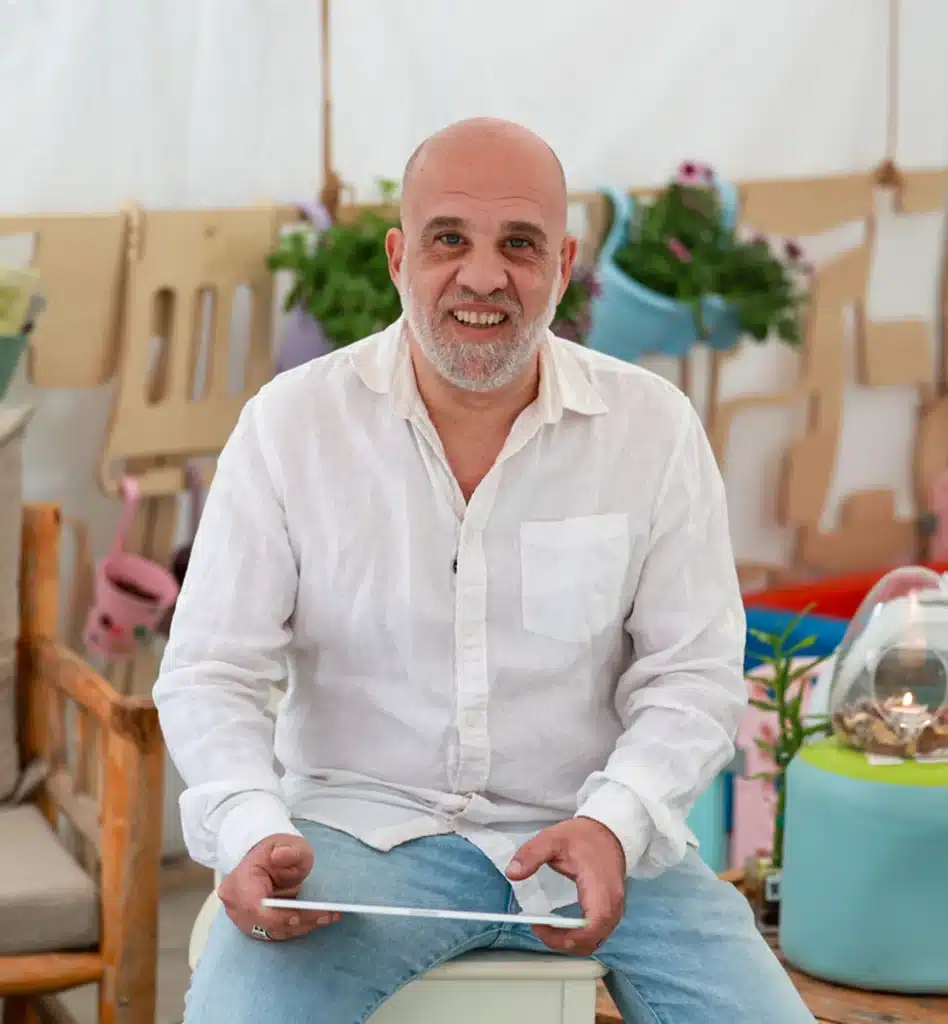
Yaniv is a Chinese medicine and hydrotherapy practitioner with over 20 years of experience, and the founder and owner of TipTipul—a clinic born from a personal dream that developed over years of thinking, doing, learning, and developing. Working with children, infants, and parents is at the heart of Yaniv’s practice.
He wakes up every morning with a sense of mission and excitement, knowing that a day awaits him filled with encounters with families facing complex challenges—sometimes frustrating and sometimes unclear—and seeking a deep, calm, and containing response. Even after many years in the profession, curiosity continues to drive him.
Yaniv seeks to understand the root of the problem, learns every day from the children and parents, and believes that good treatment begins with listening, observation, and the ability to ask questions—not just providing quick solutions. Chinese medicine treatment is carried out with patience and containment of the entire family and the child in particular. The goal is to connect with the child’s world, at a pace that suits them, and create a safe space that enables trust and cooperation.
Sometimes this means arriving for a session, but no actual treatment takes place.
For Yaniv, this is a natural and proper part of the process—a stage in which the child learns to trust and develops the ability to meet therapeutic figures outside the immediate family circle.
Yaniv’s perspective is broad and deep, addressing the small details that tell a big story:
body odor, skin color, muscle tone, sleep patterns, movement, and emotional response—always in the context of the child’s and parents’ needs. In hydrotherapy, which is his “second hat,” Yaniv creates a positive, playful, and safe environment,
even for children who cannot swim or experience insecurity in water.
Through building a personalized goal bank, a gradual process begins of developing independence and confidence in water—and from this, also strengthening the sense of security in daily life, social relationships, and family circles.

Yaniv Bar - Owner of TipTipul Clinic